GLOW Eindhoven transforms this Dutch city into something that feels like stepping inside a fever dream – but the good kind that makes you want to stay awake forever.
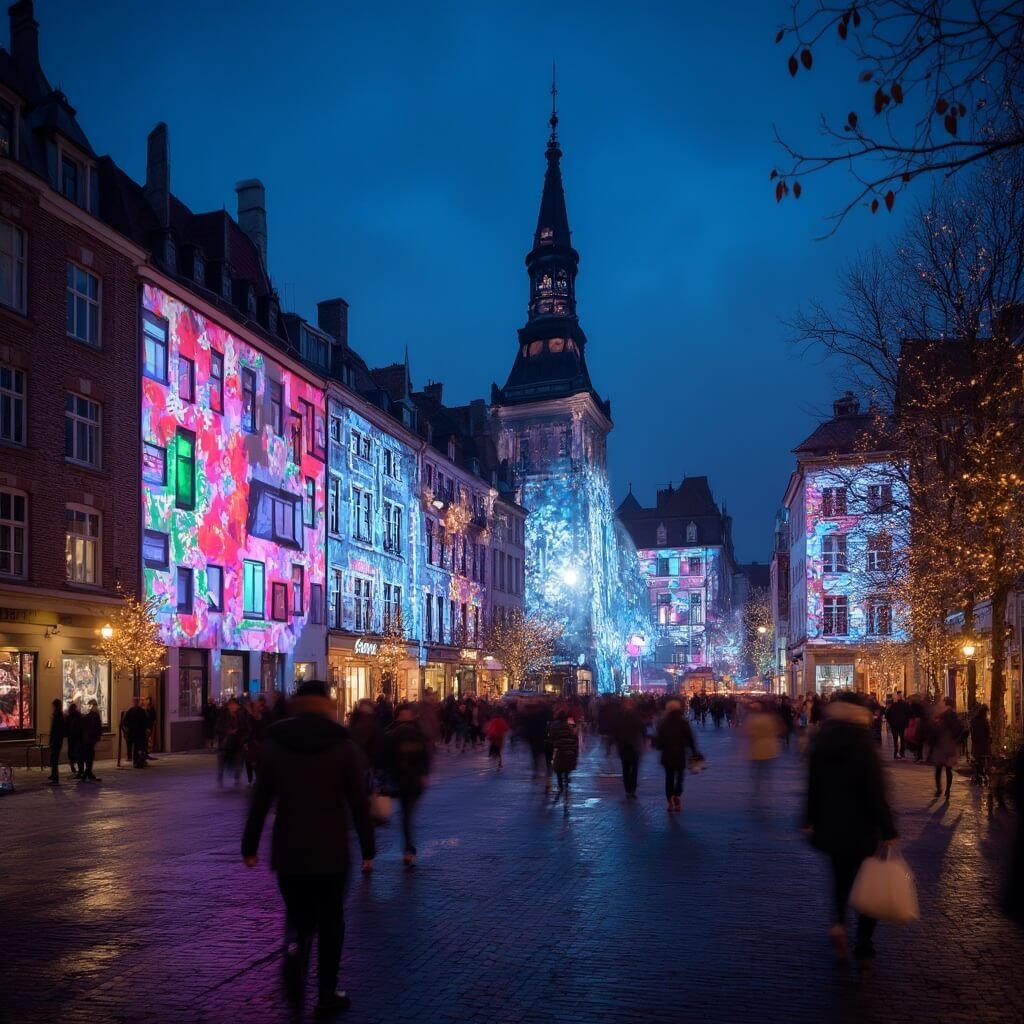
Picture this: you’re walking through streets you thought you knew, and suddenly every building becomes a canvas for light artists who’ve clearly spent too much time thinking about how to bend reality.
That’s exactly what happened to me three years ago when I stumbled upon this festival completely by accident.
What Exactly Is This Mind-Bending Light Art Festival?
GLOW Eindhoven isn’t your typical art exhibition where you shuffle quietly through sterile gallery spaces.
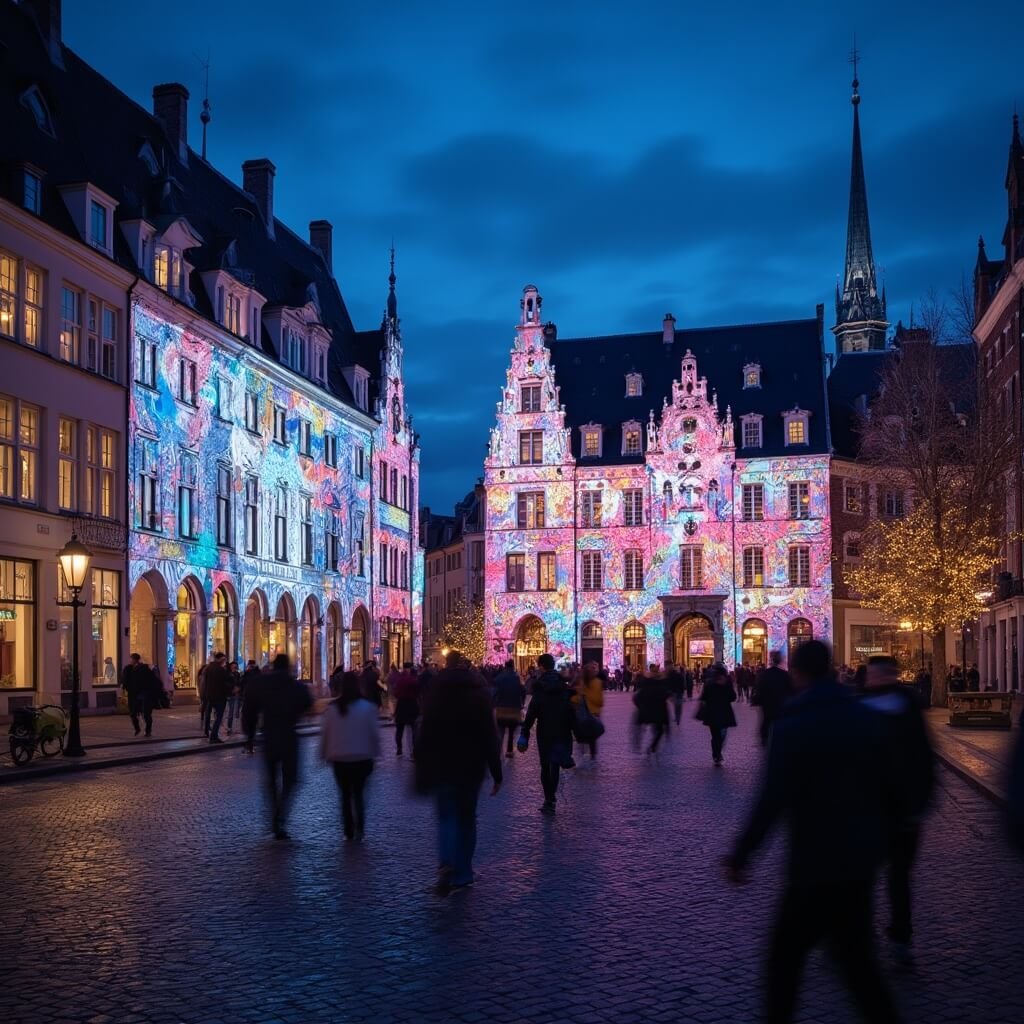
This is a free light art festival that hijacks the entire public space of Eindhoven every November.
For one magical week, the city becomes an open-air gallery where:
- Advanced media technologies (computers, sensors, animations, projections) turn ordinary buildings into extraordinary experiences
- Light installations pop up in places you’d never expect them
- The boundary between art and technology completely disappears
The festival has earned recognition as the Netherlands’ premium light art event, and frankly, after experiencing it firsthand, I can see why.
There’s simply nothing else like it.
Key takeaway: GLOW transforms public space into an immersive art experience that’s completely free and accessible to everyone.
The Secret Behind GLOW’s 20-Year Success Story
Here’s what most people don’t realise about GLOW Eindhoven – it’s been quietly revolutionising how we think about urban art for two decades.
The festival celebrated its 20th anniversary in 2025, which means it started before social media existed to document every light installation.
Back then, creating a festival where light art meets cutting-edge design was genuinely revolutionary.
Now? GLOW has won the Grand Prix of the National Event Prizes and influenced countless similar events across Europe.
But here’s the thing that really gets me excited about GLOW’s evolution…
The festival has grown from a single-city event to a regional phenomenon that now includes multiple surrounding towns.
This isn’t just about getting bigger for the sake of it.
It’s about proving that transformative art experiences can spread organically when they genuinely connect with people.
Key takeaway: Two decades of consistent innovation has established GLOW as the gold standard for light art festivals in Europe.
The Genius Behind “The Light” – Why This Theme Trilogy Changed Everything
Remember how Marvel planned their cinematic universe across multiple films?
GLOW’s organisers did something similar with their theme trilogy from 2023-2025:
- 2023: “The Beat” – Exploring rhythm and pulse in light
- 2024: “The Stream” – Examining flow and movement
- 2025: “The Light” – Celebrating light as the fundamental force
This wasn’t just clever marketing.
Each theme built upon the previous one, creating a coherent artistic narrative that unfolded over three years.
“The Light” served as the culmination – positioning light not just as a medium, but as the fundamental force that connects all existence.
The philosophical depth here is what separates GLOW from copycat festivals that focus purely on spectacle.
When I attended the 2025 edition, I could feel how the theme influenced every installation.
Artists weren’t just creating pretty lights; they were exploring light as a shared human experience.
The result was art that made you think while it made you stare in wonder.
Key takeaway: Thematic coherence across multiple years creates deeper artistic impact than standalone annual themes.
How 35+ International Artists Turn Ordinary Streets Into Extraordinary Experiences
Walk through GLOW Eindhoven and you’ll encounter work from more than 35 light artists representing both Dutch talent and international vision.
But here’s what makes their installations genuinely special – they’re designed specifically for the spaces they inhabit.
These aren’t gallery pieces dumped onto streets.
Location-specific artworks transform familiar urban landmarks:
- Stadhuisplein becomes an interactive light playground
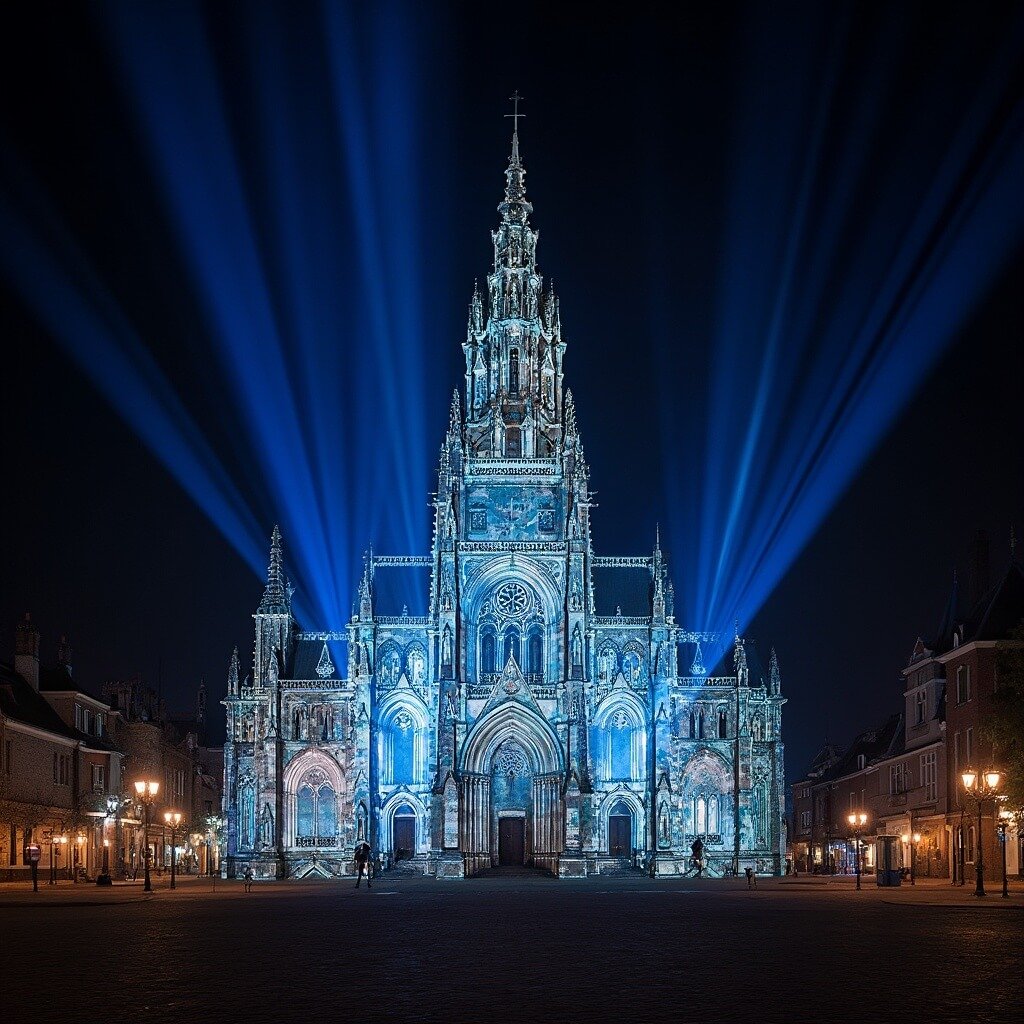
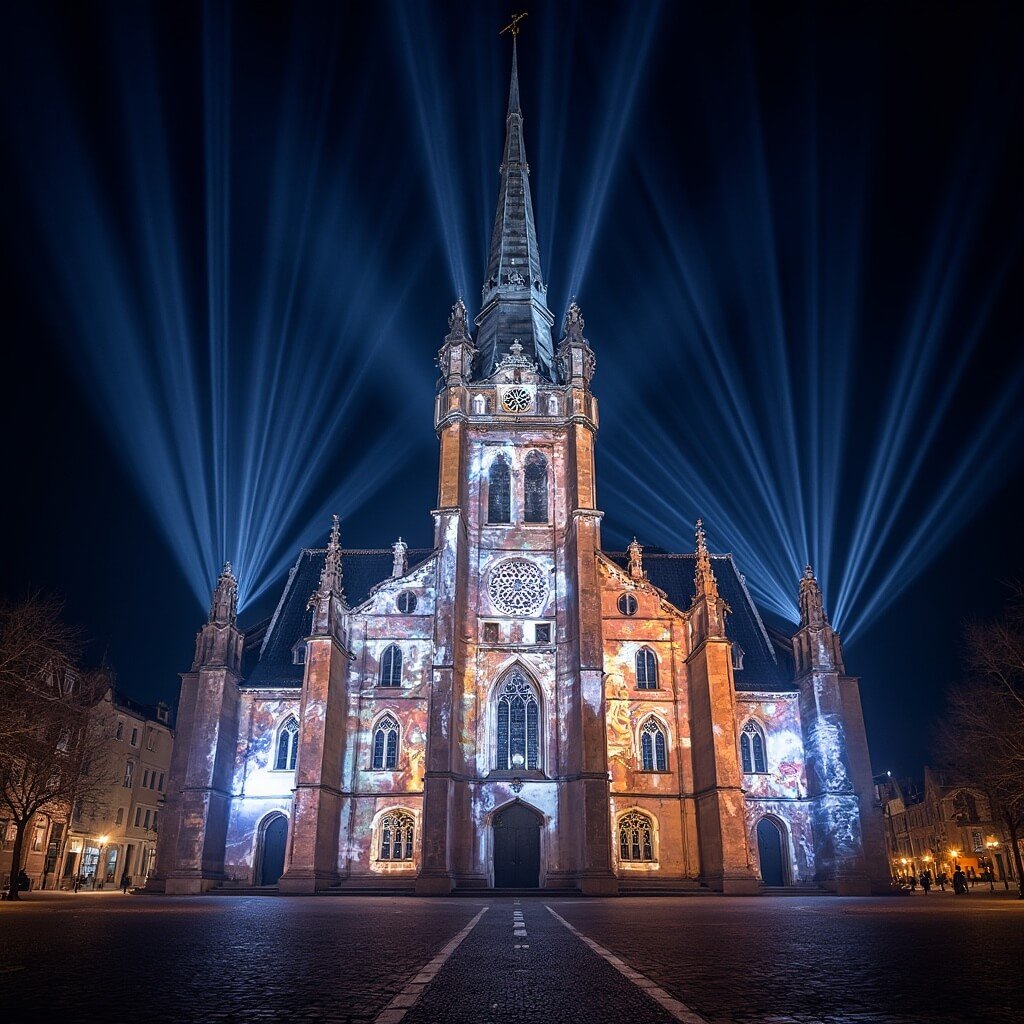
- Sint-Catharinakerk hosts projections that reimagine sacred space
- Wilhelminaplein showcases experimental digital art forms
- The Hooghuis area features large-scale architectural projections
The technical innovation is genuinely mind-blowing.
I witnessed installations using sensor-based interactivity that responded to crowd movement, creating this incredible feedback loop between audience and art.
One year, GLOW featured what they claimed was the world’s most powerful laser installation.
Watching that thing slice through the November night sky while perfectly synchronised music played was one of those moments where you realise technology and art can create something neither could achieve alone.
The international collaboration brings perspectives you simply wouldn’t get from purely local artists.
Dutch technical precision meets creative approaches from artists who see urban space completely differently.
Key takeaway: Location-specific installations by international artists create unique experiences that transform how residents and visitors perceive familiar urban spaces.
Now, as impressive as the artistic vision is, there’s a whole practical side to experiencing GLOW that can make or break your visit…
For more information on Dutch culture and art, you can visit the Van Gogh Museum bezoeken or explore the NEMO Science Museum ontdekken.
👇Find The Cheapest Flights To Anywhere Here👇
The Ultimate Survival Guide: What Every First-Time GLOW Visitor Needs To Know
Here’s the brutal truth about attending GLOW that most guides won’t tell you – preparation makes the difference between magical experience and cold, exhausting disappointment.
I learned this the hard way during my first visit when I showed up in November wearing completely inappropriate footwear and no real plan.
Three hours in, my feet were screaming and I’d missed half the installations because I was too cold to think straight.
Smart timing is everything:
- Festival runs for 7-8 days every November
- Opening hours: 18:30-23:00 (plan accordingly)
- Free admission – but crowds peak around 19:30-21:00
Essential gear for November in the Netherlands:
- Warm, waterproof jacket (trust me on this one)
- Comfortable walking shoes with good grip
- Portable phone charger for photos and navigation
- Small backpack for storing layers as you warm up from walking
The walking aspect cannot be overstated.
GLOW installations are spread across multiple kilometres of urban terrain, and there’s currently no practical shortened route that hits all the highlights.
You’re looking at 3-4 hours minimum to see everything properly.
But here’s what made the physical challenge worthwhile – the detailed route information and guided tour options that help you prioritise based on your interests and energy levels.
Key takeaway: Physical preparation and realistic time planning are essential for fully enjoying GLOW’s extensive route through Eindhoven.
How GLOW Conquered The Netherlands (And Why Regional Expansion Actually Works)
Most festivals that try to expand beyond their original city end up diluting their impact.
GLOW did the opposite.
Since 2023, the festival has strategically expanded into surrounding municipalities while keeping Eindhoven as the artistic epicentre.
The expansion timeline reveals deliberate strategy:
- 2023: Added Best, Geldrop, Mierlo, Waalre, Oirschot
- 2024: Focused on Best, Oirschot, Helmond
- 2025: Extended to Best, Helmond, Lieshout, Oirschot, Veldhoven
This isn’t random geographic sprawl.
Each location was chosen because it could offer unique architectural or natural settings that complement different types of light art.
The satellite approach means you can experience GLOW as either a focused Eindhoven adventure or a multi-city light art pilgrimage across the region.
What’s brilliant about this model is how it solved the festival’s growth challenges without compromising quality.
Instead of cramming more installations into Eindhoven’s already packed route, they created specialised experiences in towns with distinct characters.
Even the COVID-19 adaptation in 2021 demonstrated this flexibility – spreading installations across four Eindhoven districts (Centrum, Strijp S/T, Campina, TU/e) to manage crowd density while maintaining artistic coherence.
Key takeaway: Strategic geographic expansion has strengthened GLOW’s impact by creating diverse experiences while preserving the festival’s core artistic vision.
The Partnership Strategy That Keeps GLOW Free (And Innovative)
Ever wondered how GLOW maintains completely free admission while commissioning cutting-edge installations from international artists?
The answer lies in their sophisticated partner ecosystem that goes far beyond traditional sponsorship.
Partners don’t just write checks – they actively participate in creating innovative light art projects.
This collaborative approach means installations often incorporate real technological innovation rather than just pretty visuals.
I’ve witnessed installations that were essentially R&D projects where artists and tech companies explored new possibilities in interactive media.
The partnership model delivers multiple benefits:
- Financial sustainability without admission charges
- Technological advancement through corporate R&D collaboration
- Network effects that attract increasingly ambitious artists
- Community investment from local businesses and institutions
Companies get meaningful ways to showcase their innovation rather than just slapping logos on barriers.
Artists get access to resources and technologies they couldn’t afford independently.
Visitors get higher-quality experiences than purely commercial or purely artistic approaches could deliver alone.
This three-way value creation is why GLOW continues innovating after 20 years instead of becoming stale.
Key takeaway: Collaborative partnerships create sustainable innovation that benefits artists, businesses, and audiences simultaneously.
What The Reviews Don’t Tell You: The Real GLOW Experience
Reading about GLOW and experiencing it are completely different things.
The sensory overload hits you immediately when familiar buildings transform into impossible architectural illusions.
What surprised me most wasn’t the technical sophistication – though that’s impressive.
It was how the installations create spontaneous social moments between complete strangers.
You’ll find yourself standing next to someone, both staring up at a projection-mapped cathedral, and suddenly you’re having a conversation about art, technology, or just how wild it is that this is happening in public space.
The collective experience aspect that themed “The Light” around shared human experiences isn’t marketing speak – it’s genuinely what happens.
Large-scale installations become impromptu gathering points where individual appreciation transforms into community celebration.
Physical challenges visitors actually face:
- Long walking distances with limited rest opportunities
- Weather exposure for extended periods
- Crowd navigation at popular installations
- Phone battery drain from constant photo-taking and navigation
Unexpected pleasures:
- Discovery of new city areas you’d never normally visit
- Architectural appreciation enhanced by creative lighting
- Technology education through artist explanations and demonstrations
- Cultural connection with international artistic perspectives
The transformative effect on urban perception lingers long after the festival ends.
You’ll walk through Eindhoven months later and still see those buildings differently, remembering how they looked when light artists reimagined their possibilities.
Key takeaway: GLOW creates lasting changes in how participants perceive urban space, extending the festival’s impact far beyond its November dates.
Why GLOW’s Future Matters More Than You Think
GLOW Eindhoven has moved beyond being just another arts festival.
It’s become a proof of concept for how technology-enhanced public art can transform urban experiences without requiring massive infrastructure investment.
Post-jubilee developments to watch:
- New thematic directions now that the trilogy is complete
- Advanced sensor integration making installations increasingly interactive
- Sustainability initiatives addressing the environmental impact of large-scale lighting
- International influence as other cities attempt similar festivals
The broader cultural significance extends beyond Eindhoven’s borders.
GLOW demonstrates that accessible, high-quality art experiences are possible when artistic vision, technological innovation, and community partnership align properly.
Future challenges the festival faces:
- Maintaining innovation as light art becomes more mainstream
- Managing growth without losing intimate community connection
- Environmental responsibility in an era of climate consciousness
- International competition from newer festivals with bigger budgets
But here’s what gives me confidence in GLOW’s continued evolution – the foundational commitment to public accessibility combined with genuine artistic experimentation.
As long as those principles drive decision-making, GLOW will continue creating the kind of transformative experiences that remind us why art matters in public life.
The festival has proven that when you give artists the tools and freedom to reimagine public space, they’ll create experiences that change how entire communities understand their urban environment.
That’s a legacy worth celebrating, and a future worth anticipating.
Key takeaway: GLOW Eindhoven has established itself as more than a festival – it’s a model for how art, technology, and community collaboration can transform urban experiences in accessible, sustainable ways.
Whether you’re an art enthusiast, technology lover, or someone who simply appreciates experiences that challenge your perception of familiar spaces, GLOW Eindhoven offers something genuinely unique in the world of light art festivals.
For more information, visit the GLOW Eindhoven lichtfestival or check the GLOW Festival Wikipedia.
👇Ready To Book Your Trip?👇